
Message/Greetings from the President
I am delighted to announce that I have accepted the prestigious position of President of the Japan Society of Endoscopy and Robotics in Gynecology and Obstetrics at the General Meeting held on June 26, 2026. As I assume responsibility for managing this society, which comprises approximately 5,300 members, I am deeply humbled and fully aware of the weight of this responsibility.
On April 1, 2026, this society was established as a new organization, succeeding the operations of both the Japan Society of Gynecologic and Obstetric Endoscopy and Minimally Invasive Therapy and the Japan Society of Gynecologic Robotic Surgery. This was a true integration of equals, rather than one absorbing the other. It was an equal merger that respects the history, philosophies, systems, and human resources each has built, brings together their respective strengths, and jointly creates new value.
Since its establishment in 1973, the Japan Society of Gynecologic and Obstetric Endoscopy and Minimally Invasive Therapy has made great contributions to the research, education, safe dissemination, and standardization of obstetrics and gynecology endoscopic surgery over more than half a century. The solid foundation that supports today’s minimally invasive surgery has been built through the tireless efforts of many pioneers, including the development of a technology certification system, a certified training facility system, guidelines, and the dissemination of information through academic conferences and journals.
On the other hand, since its establishment as a study group in 2009 –the early days of gynecologic robot-assisted surgery–the Japan Society of Gynecologic Robotic Surgery has been dedicated to the safe introduction and widespread adoption of this technology, the establishment of a proctor system, the development of educational systems, the expansion of health insurance coverage, and international exchange. Despite being a relatively new society, its journey has been marked by driving the advancement of this field with the forward-thinking approach and agility that accurately respond to the changing times.
The two societies carry histories of differing lengths. However, this difference by no means creates a divide; rather, I believe it is the very source of our new society’s richness and potential. Our mission is to preserve the traditions cultivated over many years and the pioneering spirit that has continually driven us to explore uncharted territory—both of which we regard as equally valuable assets—and to connect them across generations and fields. With the launch of this new society, I feel it is vital that we do not rewrite our distinct pasts into a single unified narrative, but instead remember each organization’s history accurately and pass them down respectfully to future generations.
Laparoscopic surgery, hysteroscopic surgery, and robotic surgery are no longer technologies developed independently of one another. Guided by the shared goal of providing patients with safer, more precise, and less invasive medical care, our two organizations must learn from one another, complement each other, and continue to advance together. We must also actively embrace future technological innovations, including the introduction of new equipment and surgical techniques, as well as AI-driven surgical assistance, education, and remote support.
However, technological progress itself is not the goal. We must ensure that innovative technologies reliably serve the best interests of patients. This requires proper training, quality control, ongoing safety verification, bridging institutional and regional disparities, and strengthening team-based medical care. In addition, an important function of our society is to create an environment where young physicians can study with a sense of purpose, where experienced practitioners can generously pass on their experience and skills, and where all members can share the same goal.
In the future, we will strive to ensure that this society serves as a bridge between clinical practice and research, education and safety, tradition and innovation, and local care and global outreach—leading minimally invasive gynecologic and obstetric surgery in Japan to even higher standards. We aim to deepen our collaboration with relevant academic societies, government agencies, medical institutions, and companies both in Japan and abroad, disseminate new evidence and technologies from Japan, and widely share those results with society.
Rather than treating the merger and the establishment of our new society as simply a merger, we must develop it into a process of co-creation that generates new value while respecting the history of each organization. That is our responsibility as participants in the establishment of this new society. I hope we can pool the strengths of all our members and work together to build a society that inspires pride and hope. I sincerely ask for your continued support and cooperation.
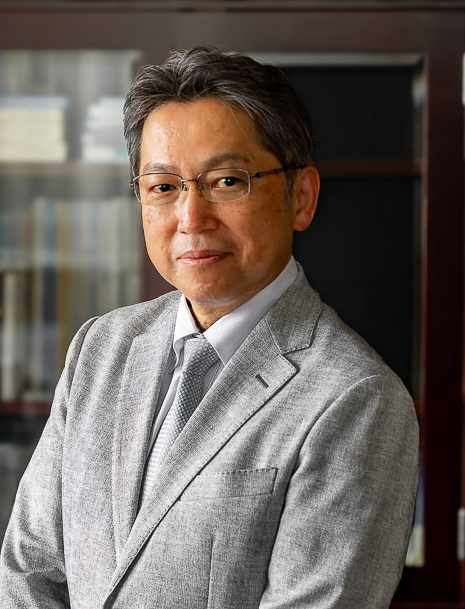
Yoshihito Yokoyama
President
Japan Society of Endoscopy and Robotics in Gynecology and Obstetrics